
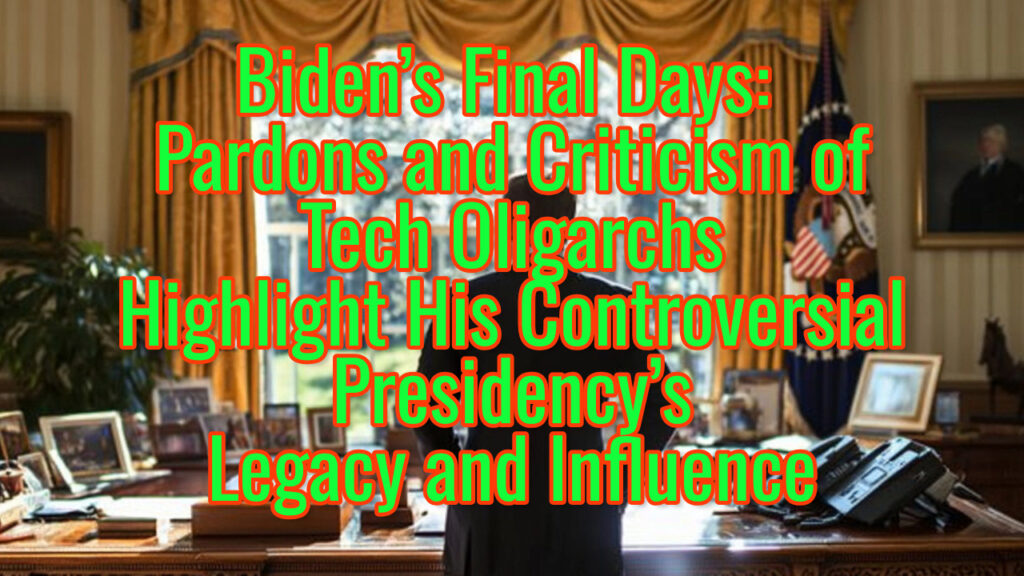
Final Acts of the Biden Presidency
The closing days of President Joe Biden’s administration have sparked deep controversy and criticism, particularly regarding his use of pardons. Critics argue that these actions significantly degraded the presidential office and threatened American democracy. The pardons, described as a “tsunami,” primarily benefited Biden’s allies, raising questions about their legality and the implications for the rule of law.
Irony in Criticism of Oligarchs
In his farewell speech, Biden criticized the “tech oligarchs,” expressing concern about their growing power and the spread of misinformation. This criticism appears hypocritical given his administration’s previous reliance on social media platforms to propagate narratives favorable to his agenda, especially during the Trump-Russia collusion claims, which were later discredited. Critics contend that Biden’s rhetoric about accountability is undermined by his administration’s actions, which have been accused of censoring dissenting voices and manipulating information.
Preemptive Pardons and Legal Concerns
Biden’s issuance of preemptive pardons has raised eyebrows, as traditionally, pardons are granted post-conviction. This practice has led to allegations of guilt among those pardoned, including individuals connected to the January 6th events and members of Biden’s own family. The legitimacy of such pardons is questioned, especially in light of Biden’s previous statements against preemptive pardons. Critics highlight the inconsistency in applying legal standards, suggesting that these moves reflect an abuse of presidential power for personal and political protection.
Historical Context of Pardons
Historical precedents for preemptive pardons, such as Gerald Ford’s pardon of Richard Nixon, are invoked in discussions about Biden’s actions. While some argue that such pardons can be justified in extraordinary circumstances, the broader implications for justice and accountability in a democracy are concerning. The notion that individuals can receive pardons without being convicted raises critical questions about the integrity of the legal system.
Broader Implications for Democracy
The implications of Biden’s actions extend beyond individual cases, prompting a reevaluation of the relationship between power and accountability in American governance. Critics assert that if those in power can evade the law through presidential pardons, the foundational principles of justice and equality before the law are fundamentally compromised. This situation poses serious threats to the integrity of democracy, as the rule of law must apply universally, without exception for those in power.
In summary, the final acts of Joe Biden’s presidency, particularly regarding the use of pardons, have ignited a fervent debate about the intersection of legality, power, and democratic principles, raising essential questions about the future of American governance.
Key Insights
Biden’s Presidency and Pardons
- The video criticizes President Biden’s final actions in office, particularly the issuance of preemptive pardons for associates, suggesting that they reflect poorly on the integrity of the presidency.
- Comparisons are drawn to past precedent, notably President Gerald Ford’s pardon of Richard Nixon, which raises questions about the legitimacy and morality of Biden’s pardons.
- The narrative implies that granting pardons to those not yet convicted undermines the justice system and signals a consciousness of guilt among recipients.
Critique of Biden’s Farewell Address
- Biden’s farewell speech is described as hypocritical. In it, he warns against the influence of tech oligarchs while having benefited from their support during his presidency.
- The video highlights his call for social media accountability, juxtaposed with allegations of censorship during his administration regarding narratives like the Trump-Russia collusion.
- It emphasizes a perceived contradiction between Biden’s criticism of misinformation and the alleged suppression of the Hunter Biden laptop story.
The Concept of Justice and Law
- The commentary addresses the broader implications of presidential pardons, questioning if such actions erode the rule of law and the principle that no one is above the law.
- It invokes historical perspectives on justice, emphasizing that laws are meant to be impartial and inviolable, not manipulated for personal or political gain.
- The speaker warns that allowing exemptions for political allies could jeopardize the integrity of democracy and the legal system, suggesting a dangerous precedent.
Public Perception and Accountability
- The video discusses the public’s perception of Biden’s actions as indicative of a more significant trend of political hypocrisy, particularly in how different administrations handle legal accountability.
- It contrasts the reactions to Trump’s pardons versus Biden’s, highlighting a shift in narrative depending on the political party in power.
- Questions about the justice system’s legitimacy are raised when political figures leverage pardons to protect themselves and their associates, undermining public trust.
Thanks for Reading
Steven G Smith


More Stories
45,000 to 120,000: Why the Arrival Date for First Australians Keeps Moving
Analyzing Communism’s Failed Ideology and Its Legacy as a Unique Social Experiment.
Examining the rise and controversies surrounding gender ideology, focusing on its impact on society and traditional definitions of gender.