

Introduction to Communism as a Failed Religion
Communism is often viewed as a radical ideological experiment to transform society based on specific philosophical and economic principles. However, its inability to establish itself as a sustainable civilization raises questions about its foundational beliefs and practical implications. This essay explores the reasons behind communism’s failure, framing it as a failed religion rather than purely a political system.
Historical Context and Philosophical Roots
Karl Marx, the father of communist ideology, emerged from a 19th-century Europe that faced severe social and economic upheaval. The harsh realities of industrialization, class oppression, and extreme poverty shaped his worldview. Marx’s belief that capitalism was the root of societal ills led him to envision a revolutionary upheaval where the working class would overthrow the bourgeoisie. However, the irony lies in that many of the societal issues he highlighted existed in non-capitalist societies, such as those in China and India.
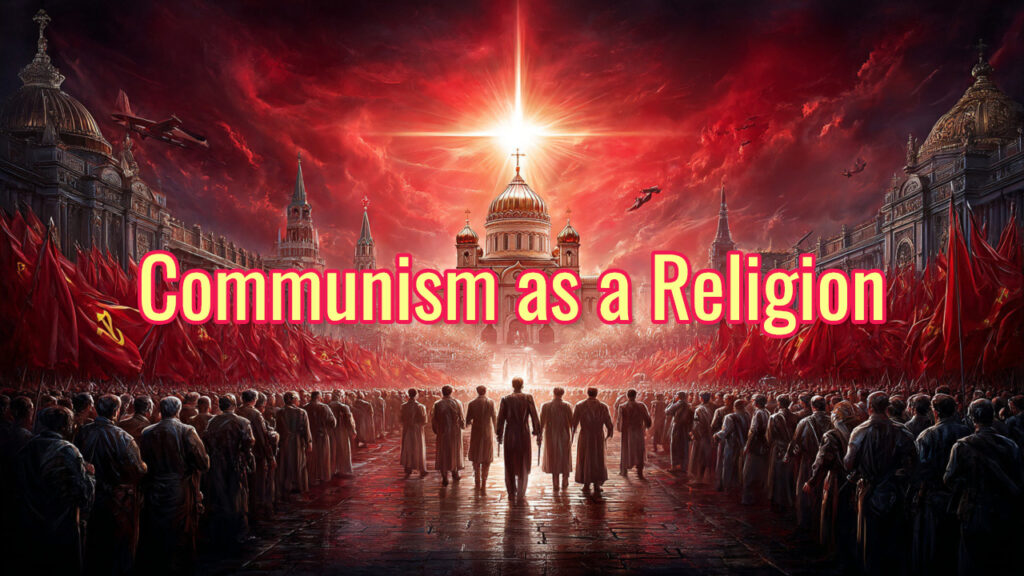
Communism as a Religion
Communism exhibits characteristics akin to a religion by offering a narrative that includes the promise of a utopian future, the belief in inherent good among the oppressed, and a universalist message. Similar to religious doctrines, communism fosters a strong in-group identity, often justifying extreme measures against perceived oppressors. Its adherents frequently reject critiques of their ideology, much like religious followers defend their beliefs against skepticism.
The Psychological and Sociological Underpinnings
The appeal of communism can be attributed to its emotional resonance, often driven by envy and a desire for equality. This emotional foundation can lead to societal upheaval, as seen in various historical revolutions. Yet, the promises of communism—such as economic equality and social justice—often fail to materialize in practice, resulting in widespread suffering and authoritarian regimes. The social structures that communists sought to dismantle frequently reemerged in new forms, perpetuating the same issues they aimed to resolve.
Failure in Practice and Ideological Flaws
Communism’s practical applications consistently resulted in economic stagnation, famine, and totalitarianism. Despite its theoretical ideals, countries that adopted communism, such as the Soviet Union and China, experienced significant downturns in quality of life and social cohesion. The assumption that human nature could be molded entirely by societal structures ignored the complexities of individual behavior and motivation, leading to systemic failures.
Conclusion: The Path Forward
To combat the ideological allure of communism, societies must reinforce the value of personal responsibility, agency, and moral accountability. Building strong family units, promoting small businesses, and fostering community ties can provide the stability and resilience necessary to counteract the disillusionment that often leads individuals to embrace radical ideologies. Ultimately, the historical failures of communism highlight the need for a nuanced understanding of societal dynamics and the importance of fostering environments where individuals feel empowered and valued.
Key Insights.
Historical Context of Communism
- Karl Marx’s vision of communism arose from the brutal socio-economic conditions of the mid-19th century, characterized by overpopulation and exploitation during the Industrial Revolution.
- The transition from agrarian societies to urban industrial ones led to a breakdown of traditional social structures, creating a context ripe for Marx’s revolutionary ideas.
- Despite Marx’s belief that revolutions would occur in developed nations, historical evidence shows communism primarily took root in less industrialized societies like Russia and China.
Communism as a Religion
- The video posits that communism functions similarly to a religion, offering a community, a narrative, and rituals without a deity, akin to Buddhism or Confucianism.
- It creates a dichotomy of good versus evil, positioning the proletariat as virtuous and the bourgeoisie as oppressors, similar to biblical narratives.
- The inflexible adherence to Marxist ideology makes it resistant to critique, paralleling religious fervor, where questioning the faith is often hostile.

Failures of Communist Ideology
- Marx’s theories rest on the flawed assumption that economic equality can be achieved through social engineering, neglecting inherent human inequalities and the complexities of human nature.
- Historical implementations of communism have led to totalitarian regimes, mass poverty, and societal collapse, contradicting Marxist predictions of a utopian society.
- The ideologies have failed to produce sustainable economic growth or social welfare, often resulting in greater inequality than capitalist societies.
Psychology Behind Support for Communism
- The video highlights that communism attracts those with a strong sense of envy and discontent towards the wealthy, often stemming from feelings of powerlessness in modern bureaucratic societies.
- It argues that academic elites and individuals with less agency gravitate towards communist ideas to express their frustrations with existing power structures.
- The appeal of communism is linked to a desire for equality and shared responsibility, overshadowing the need for individual accountability and merit.
Communism’s Cultural and Social Impact
- The rise of communism is seen as a reaction against traditional values and family structures, which historically provided stability and community.
- The disintegration of these values in modern industrial societies has created a void that communism attempts to fill, often leading to authoritarian governance.
- The video concludes that the revival of strong familial, religious, and community structures could counteract the allure of communist ideologies, promoting individual empowerment and responsibility.
Thanks For Reading
Steven G Smith




More Stories
Is the Gas Industry Really Ripping Off Australians? Let’s Find Out!
45,000 to 120,000: Why the Arrival Date for First Australians Keeps Moving
Examining the rise and controversies surrounding gender ideology, focusing on its impact on society and traditional definitions of gender.